23 Jun Carton Packaging Machines and End-of-Line Packaging Enhancing Efficiency with Modern Cartoning Equipment
Carton Packaging Machines and End-of-Line Packaging: Enhancing Efficiency with Modern Cartoning Equipment
Understanding Cartoning Machine Types and Operations
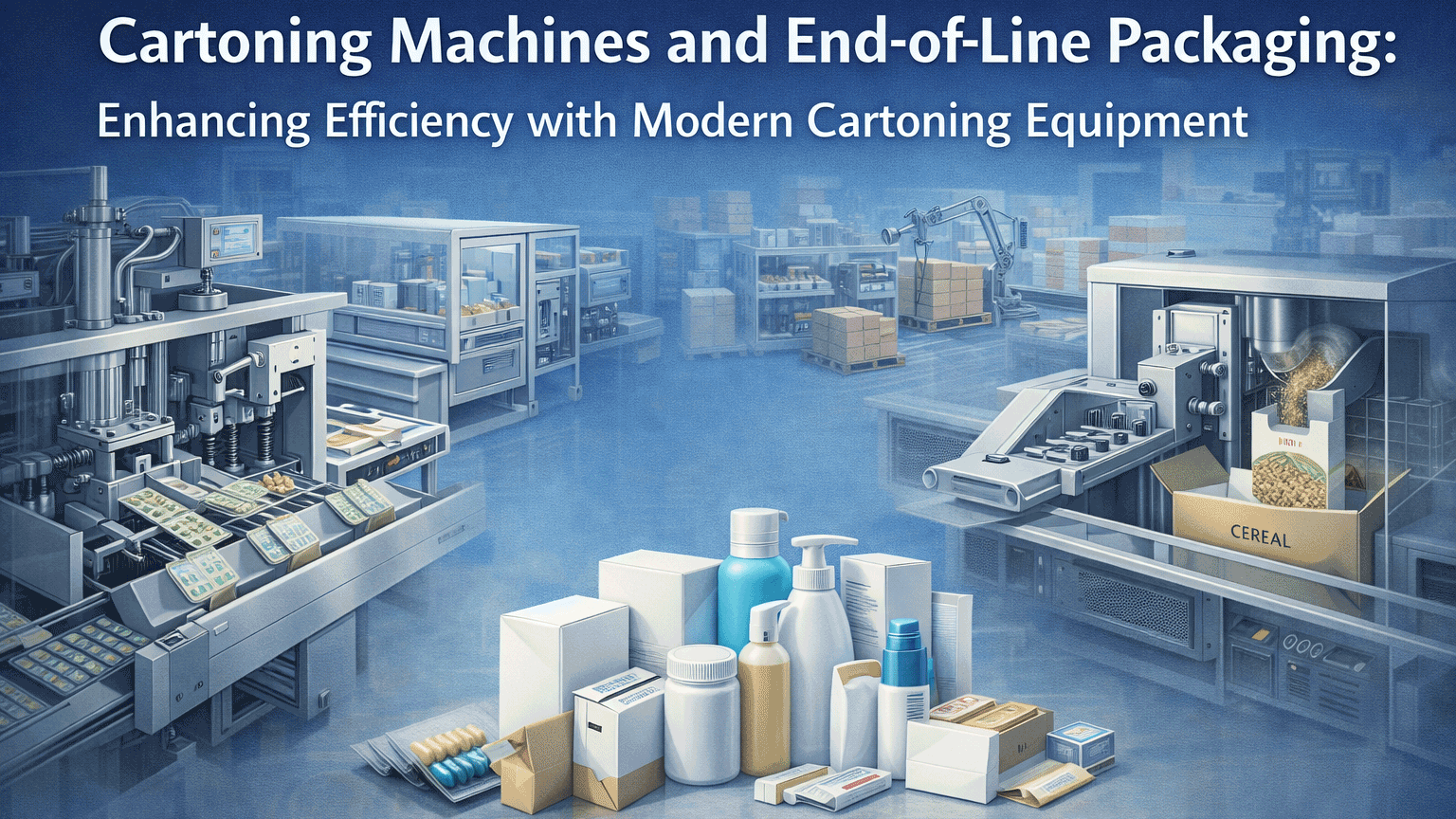
Cartoning machines are an essential part of modern end-of-line packaging systems, responsible for forming, loading, and sealing cartons around various products. These carton packaging machines are widely used in the pharmaceutical, food, cosmetics, and personal care industries, as well as in applications involving bottles, blisters, pouches, sachets, and stick packs.
Two main types of cartoning machines are used across industries: horizontal cartoners and vertical cartoners. Horizontal cartoners are commonly used for high-speed applications such as packing cereal, snacks, personal care items, and baking mix. Products are loaded into cartons horizontally, which makes them ideal solutions for packaging items that are stacked or arranged in rows. Vertical cartoners, in contrast, load items from the top and are suitable for granular products, loose pouches, and other bulk-fill products. Each type offers specific advantages depending on the size, shape, and fragility of the product being packaged.
Another key distinction is between intermittent motion and continuous motion cartoning machines. Intermittent motion machines operate in a step-by-step fashion, pausing at each station during the packaging process. These machines are well-suited for lower-volume production and offer ease of maintenance and flexibility. On the other hand, continuous motion cartoning machines operate without stopping, allowing for high-speed performance that can meet demands of 200 or more cartons per minute. This makes continuous motion systems the preferred choice for large-scale production environments where throughput and precision are critical.
Integrating Cartoning Equipment in End-of-Line Packaging
Modern cartoning equipment is often part of a larger end-of-line automation system that includes tray packers, case packers, and palletizers. These machines work in harmony to form cartons, insert products, close and seal the boxes, and prepare them for secondary packaging or shipping. Cartoning machinery has become increasingly sophisticated, with the latest technology allowing for automated format changes, quick adjustments, and real-time performance monitoring.
For industries packaging personal care products, flexible pouches, or bottles, cartoning equipment provides enhanced ergonomics and reduced manual labor. Load cartoners can handle various sizes and configurations of cartons, adapting quickly to different production needs. With the right machine engineering, these systems deliver consistent quality, precise product insertion, and proper sealing, all while maintaining hygienic standards required for food and pharmaceutical markets.
Sustainability is also influencing the development of cartoning systems. As markets shift toward recyclable and paper-based carton materials, cartoning machine manufacturers are responding by developing machines that can handle these materials without compromising speed or quality. Whether it is cartons for canisters, bottles, or filter bags, the ability to manage varied packaging formats with minimal waste is a key advantage for today’s automated cartoning solutions.
Choosing the Right Cartoning Machine for Your Business
When selecting cartoning machines, companies must evaluate several key factors including production scale, product type, required speed, and packaging material. For businesses seeking high throughput and minimal downtime, continuous motion cartoning machines offer an efficient and scalable solution. These machines are designed for durability, quick changeovers, and minimal operator intervention, making them suitable for fast-paced production lines.
For smaller operations or those dealing with multiple SKUs and frequent product changes, intermittent motion cartoning equipment may provide the necessary flexibility. These systems are often simpler to operate, easier to maintain, and offer ergonomic benefits that improve operator efficiency.
Additionally, cartoning machines should be evaluated for their compatibility with upstream and downstream equipment. Seamless integration with filling machines, labeling units, case packers, and palletizing systems enhances the overall efficiency of the packaging line. Choosing the right cartoning machinery requires an understanding of current and future packaging needs, including sustainability goals and evolving consumer demands.
Ultimately, the ideal cartoning solution is one that combines speed, precision, reliability, and adaptability. Whether packaging pouches, baking mix, bottles, or other products, modern cartoning systems are built with hygiene, ergonomics, and production efficiency in mind. As automation continues to advance, cartoning machines will remain at the core of end-of-line packaging operations, helping businesses across industries streamline operations and meet growing market expectations.
