
07 Jul Sustainable Packaging and Eco-Friendly Machinery Powering a Greener Future of Production
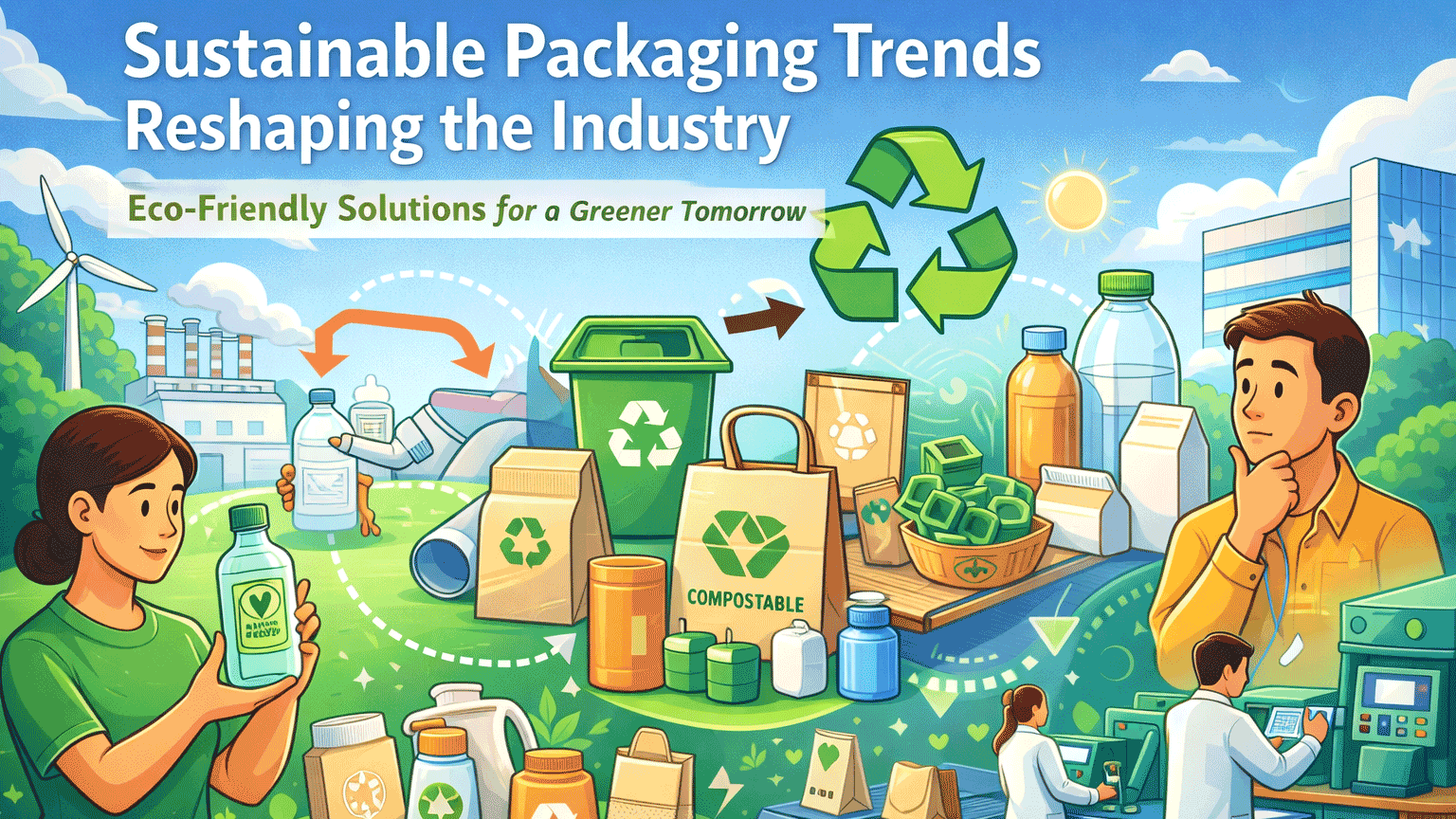
Sustainable Packaging Trends Reshaping the Industry
The global packaging industry is undergoing a major transformation as companies respond to environmental challenges, consumer expectations, regulatory pressure, and long‑term sustainability goals. Sustainable packaging has become an integral part of modern business strategy, shifting the focus from traditional single‑use plastics toward recyclable materials, compostable structures, renewable resources, and eco friendly packaging solutions that minimize environmental impact. As environmental concerns intensify, sustainable packaging options are no longer niche alternatives but central to mainstream packaging design, manufacturing, and innovation.
Across industries such as food packaging, personal care, healthcare, and consumer goods, companies are rethinking packaging materials, production processes, and supply chains to reduce plastic waste, lower carbon footprint, and contribute to a healthier planet. These efforts support sustainability goals while maintaining high performance, product safety, shelf life, and consumer trust. The push for more sustainable practices reflects a broader commitment to the circular economy, where packaging materials are reused, recycled, or sourced from renewable raw materials rather than discarded as waste.
From Single‑Use Plastics to Compostable and Recycled Materials
One of the most significant sustainable packaging trends is the gradual move away from virgin plastics toward sustainable materials that reduce reliance on fossil fuels. For decades, plastic bottles, plastic bags, and plastic packaging have dominated global markets due to their durability, low cost, and flexibility. However, growing awareness of plastic waste pollution has triggered demand for eco friendly options that minimize environmental impact and improve recyclability.
Manufacturers are increasingly exploring sustainable packaging solutions that incorporate recycled content, compostable materials, paper‑based packaging, plant‑based plastics, and biodegradable films. These new materials are designed to maintain product quality and shelf life while reducing environmental impact throughout the packaging lifecycle. Sustainable packaging examples now include recyclable cartons, compostable pouches, lightweight plastic alternatives, molded fiber trays, and paper‑based flexible packaging designed to replace traditional plastic packaging.
By reducing reliance on virgin plastics and increasing the use of recyclable materials, companies can significantly reduce carbon footprint and plastic waste. These sustainable packaging options also help align packaging operations with evolving consumer demand for environmentally responsible brands. The shift toward sustainable materials reflects an industry‑wide effort to work closely with suppliers, packaging designers, material scientists, and technology providers to develop packaging solutions that balance environmental benefits with business performance.
Consumer Demand and Regulatory Pressure Driving Change
Consumer expectations have become a powerful force shaping sustainable packaging trends. Modern consumers increasingly seek eco friendly packaging that reflects corporate commitment to sustainability, environmental protection, and responsible sourcing. Many customers now expect brands to reduce plastic waste, use recyclable materials, increase recycled content, and support sustainability goals through transparent packaging practices.
At the same time, regulatory frameworks around the world are placing pressure on companies to adopt more sustainable packaging practices. Governments and environmental agencies are implementing policies aimed at reducing single‑use plastics, encouraging recycling, promoting renewable resources, and enforcing extended producer responsibility programs. These regulations are accelerating the adoption of sustainable packaging solutions across food packaging, healthcare, retail, and industrial sectors.
The combination of regulatory requirements and consumer demand is pushing companies to innovate packaging materials, improve packaging design, and adopt eco friendly options that reduce environmental impact without compromising product safety or quality. Businesses that fail to stay up to date with sustainability goals risk losing market competitiveness, consumer trust, and regulatory compliance.
Lightweighting and Material Optimization for a Healthier Planet
Lightweighting has emerged as a key strategy in sustainable packaging design. By reducing material usage while maintaining strength, durability, and performance, companies can lower packaging weight, decrease transportation emissions, reduce raw material consumption, and improve environmental impact across the supply chain.
Lightweight packaging solutions include thinner plastic bottles, reduced‑material boxes, flexible packaging films, smaller caps, compact container designs, and optimized bag structures. These innovations reduce energy consumption during manufacturing and transportation while maintaining high performance and product protection. Lightweighting also contributes to waste reduction by decreasing the total volume of packaging materials entering landfills.
Material optimization plays a pivotal role in sustainable packaging innovation. Engineers and designers work closely with packaging material suppliers to test new materials, improve structural integrity, and enhance performance while minimizing environmental impact. This collaborative process allows companies to introduce sustainable packaging examples that support a healthier planet while maintaining product safety, shelf life, and brand appeal.
Eco‑Friendly Packaging Machines and Production Efficiency
As packaging materials evolve, packaging machines must adapt to handle new materials, improve efficiency, and support sustainability across manufacturing operations. Modern packaging machines are no longer designed solely for speed and output but also for energy efficiency, waste reduction, flexible material handling, and compatibility with eco friendly packaging options. The integration of sustainable technologies into packaging equipment plays a pivotal role in enabling efficient production processes that align with sustainability goals.
Packaging machinery is being redesigned to accommodate compostable films, recyclable materials, paper‑based packaging, bio‑plastics, and renewable raw materials. These machines must maintain high performance while minimizing environmental impact, reducing waste, and supporting sustainable future objectives across global manufacturing networks.
How Packaging Machines Are Evolving to Support Sustainability
Packaging machines are evolving to process new materials that require different sealing, forming, cutting, and handling techniques compared to traditional plastics. Compostable films, paper‑based packaging, and plant‑based plastics often behave differently under heat, pressure, and mechanical stress, requiring specialized engineering and precise control systems.
For example, modern packaging machines designed for food packaging must handle paper‑based materials while maintaining strong seals, product safety, and shelf life. Horizontal form‑fill‑seal systems and flexible packaging machines are now equipped with advanced technologies that allow them to seal eco friendly substrates at high speeds without damaging fragile materials.
New packaging solutions also include machines capable of processing recyclable pouches, fiber‑based trays, compostable bags, and sustainable boxes. These innovations support sustainability while maintaining efficient production processes, ensuring manufacturers can scale operations without sacrificing environmental benefits.
Energy Efficiency and Waste Reduction in Machinery Design
Energy consumption represents a major environmental impact factor in packaging operations. To minimize environmental impact, modern packaging machines incorporate energy‑efficient motors, optimized heating systems, low‑air‑consumption designs, and intelligent control technologies that reduce power usage during production cycles.
Waste reduction is another core priority in sustainable packaging machinery development. Advanced packaging machines now feature precise material dosing, accurate cutting systems, and automated quality control sensors that minimize material waste and prevent defective packaging from entering distribution channels. These technologies help manufacturers reduce excess material usage, improve packaging efficiency, and support circular economy initiatives.
Additionally, smart packaging machines allow real‑time monitoring of material usage, energy consumption, and production efficiency. By analyzing operational data, companies can optimize machine performance, improve process efficiency, and reduce environmental impact across packaging lines.
Integrating Packaging Innovation with Sustainability Strategy
Sustainable packaging innovation extends beyond materials and machinery into broader corporate sustainability strategy. Many companies are integrating packaging decisions into long‑term environmental planning, focusing on recyclable materials, renewable resources, circular economy principles, and sustainable production models.
Packaging innovation plays an integral part in achieving sustainability goals by enabling companies to develop eco friendly packaging solutions that meet both environmental and commercial requirements. Businesses that invest in sustainable packaging machines, eco friendly options, and advanced packaging technologies position themselves as leaders in environmental responsibility while strengthening brand reputation and customer loyalty.
To support sustainability effectively, companies must work closely with packaging material suppliers, machine manufacturers, technology providers, and regulatory bodies. This collaboration ensures packaging solutions remain compliant, scalable, high performance, and aligned with evolving environmental standards and consumer expectations.
Sustainable Packaging in Food Packaging and Consumer Markets
Food packaging represents one of the largest segments driving sustainable packaging innovation. As consumer demand for eco friendly packaging grows, food brands are shifting toward recyclable materials, compostable packaging, and reduced plastic packaging to lower carbon footprint and support environmental sustainability.
Sustainable food packaging must balance environmental benefits with product safety, hygiene, shelf life, and quality. Packaging materials must protect food from contamination, moisture, oxygen, and spoilage while minimizing environmental impact. Innovations in sustainable packaging materials now include recyclable plastic bottles, compostable containers, paper‑based pouches, plant‑fiber trays, and flexible packaging solutions that extend shelf life while reducing waste.
The packaging industry is also exploring new packaging designs that reduce material usage while maintaining high performance. Lightweight packaging, reusable containers, refill systems, and modular packaging structures are becoming more common as companies strive to minimize plastic waste and improve sustainability outcomes.
Circular Economy and the Future of Packaging Sustainability
The circular economy concept is reshaping the packaging industry by promoting material reuse, recycling, composting, and closed‑loop systems that reduce waste and conserve raw materials. Instead of treating packaging as disposable, circular economy models encourage companies to design packaging materials that can be recovered, reused, or reintegrated into production cycles.
Recycled content is becoming a core component of sustainable packaging solutions, reducing dependence on virgin plastics and supporting resource conservation. Many companies now incorporate post‑consumer recycled materials into plastic bottles, bags, boxes, and flexible packaging to lower environmental impact while maintaining product quality and performance.
To succeed in a circular economy, packaging design must prioritize recyclability, material recovery, and compatibility with recycling infrastructure. Packaging machines must also be capable of processing recycled materials, compostable films, and renewable raw materials without compromising efficiency or reliability.
Sustainable Packaging as a Business and Brand Advantage
Sustainable packaging is no longer just an environmental responsibility but also a competitive business advantage. Companies that demonstrate commitment to sustainability through eco friendly packaging, recyclable materials, and sustainable practices can strengthen brand identity, attract environmentally conscious consumers, and build long‑term customer trust.
Sustainability also contributes to operational efficiency by reducing material costs, minimizing waste, lowering energy consumption, and optimizing manufacturing processes. By investing in sustainable packaging solutions, companies can reduce long‑term expenses while improving environmental impact and supporting corporate social responsibility initiatives.
Innovation plays a pivotal role in driving sustainable packaging forward. Advances in materials science, packaging technology, machine engineering, and digital monitoring systems continue to expand the range of sustainable packaging options available to manufacturers. These innovations enable businesses to stay up to date with sustainability goals, meet regulatory requirements, and deliver high‑quality packaging solutions to customers worldwide.
The Road Toward a Sustainable Future in Packaging
The future of packaging lies in sustainable materials, eco friendly packaging machines, circular economy systems, and environmentally responsible manufacturing practices. As environmental challenges intensify, the packaging industry must continue evolving to reduce plastic waste, lower carbon footprint, improve material efficiency, and contribute to a healthier planet.
Companies that embrace sustainable packaging solutions, invest in innovative packaging technologies, and adopt more sustainable practices will be better positioned to meet consumer expectations, regulatory demands, and long‑term business objectives. Sustainable packaging is not just a trend but an integral part of shaping a sustainable future for the packaging industry, manufacturers, consumers, and the planet.
