04 Jun Efficiency and Accuracy The Role of Filling Machines in the Nutraceutical Industry.
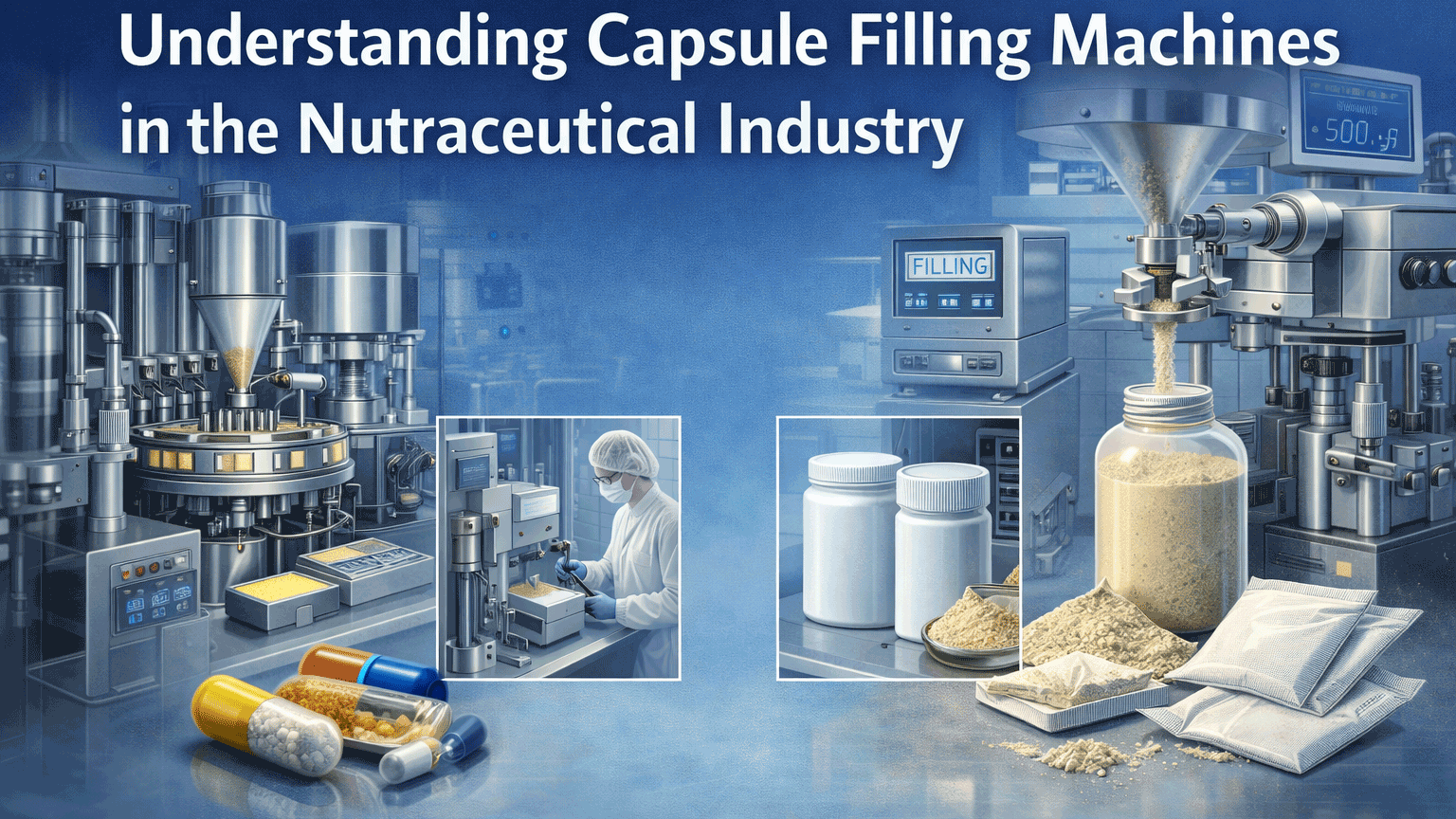
Understanding Capsule Filling Machines in the Nutraceutical Industry
Capsule Filling Machine Overview
In the nutraceutical industry, capsule filling machines play a crucial role in the efficient, clean, and accurate production of dietary supplements. These machines are designed to fill powders, granules, pellets, or mini tablets into hard capsules, often made of gelatin or vegetarian alternatives. The two main types of capsule filling machines include manual and automatic capsule fillers, with semi automatic models serving as a hybrid option suitable for small-scale production or laboratory testing environments.
Automatic capsule filling machines are ideal for high-volume operations that demand consistent output, reduced labor costs, and minimized contamination. These machines can achieve high speeds while maintaining precise capsule weight control, making them a cornerstone of commercial nutraceutical production. In contrast, manual capsule fillers are typically used by small businesses, startup brands, or research labs for low-batch production or formulation testing.
A well-developed capsule filling system reduces product waste, supports various combinations of ingredients, and ensures GMP-compliant operations. It is essential that any filling equipment used in the nutraceutical field be flexible enough to accommodate different capsule sizes and fill materials, and be easy to clean, monitor, and maintain.
How the Capsule Filling Process Works
The capsule filling process begins with the separation of empty capsules into two parts: the capsule body and the capsule cap. Most capsule fillers, whether semi automatic or automatic, use a vacuum system to separate the capsules and hold them in place. This capsule separation step ensures that each capsule is correctly aligned before the filling stage.
Once the capsule bodies are properly positioned, the next step is to fill them with the measured supplement ingredients. These could be powders, granules, mini tablets, or even pellet combinations, depending on the formulation. The material is dispensed into each capsule body with precision using dosing stations. In an automatic filling machine, this process is typically integrated with weight checking mechanisms to ensure uniformity and quality control. In semi automatic capsule filling systems, an operator may manually align or inspect capsules before or after filling.
After the capsules are filled, the capsule caps are repositioned over the filled bodies, and the sealing mechanism engages. This results in securely sealed, filled capsules ready for packaging. Most systems also include a capsule ejection station that safely transfers the finished capsules into collection bins, minimizing the risk of damage or contamination.
The efficiency of this process is measured in terms of output per hour and the percentage of capsules filled accurately. Modern capsule filling machines can handle thousands of capsules per hour with high precision, reducing waste and supporting cleanroom production standards.
Manual vs Automatic Capsule Filling Machines
Choosing between manual, semi automatic, and automatic capsule filling machines depends on the production scale, labor availability, budget, and regulatory requirements of a business. Manual capsule fillers are operated entirely by hand, making them suitable for small batches, custom blends, or formulation development in labs. These machines are compact, low-cost, and require minimal training but are limited in terms of speed and output.
Semi automatic capsule filling machines offer an intermediate solution for businesses scaling up their production. These machines automate part of the capsule separation and filling process but still require human involvement for alignment, loading, or unloading. Semi automatic systems are ideal for medium-volume supplement companies that need a balance between automation and operator control.
Fully automatic capsule filling machines are the preferred solution for large-scale nutraceutical manufacturers. These machines operate with minimal human intervention, and can fill, seal, and eject thousands of capsules per hour. They offer superior precision, reduce labor costs, and support integrations with weighing systems, polishing machines, and packaging lines. Automatic capsule filling machines are also essential for complying with pharmaceutical industry standards and maintaining consistent product quality.
Each model must be selected based on the desired capsule size, fill weight, product type, and compliance needs. Technical support, training, and spare parts availability are also important factors when investing in such equipment.
Powder Filling Machines: From Protein Powders to Bottles and Sachets
The Role of Powder Filling Machines in Supplement Production
Powder filling machines are essential in the production of powdered supplements such as protein powders, meal replacements, pre-workout mixes, and botanical blends. These machines are designed to dispense and fill precise amounts of powder into containers like plastic bottles, jars, sachets, or bags.
The powder filling process relies on volumetric or gravimetric methods to ensure accurate dosing. Volumetric systems fill based on measured volume, while gravimetric systems use real-time weight measurement to ensure high accuracy. Many modern powder filling machines include auger-based dosing mechanisms that allow for smooth, clog-free flow of fine powder materials.
In a supplement production setting, powder filling machines must be equipped with dust control systems, anti-static components, and sanitary contact surfaces to maintain quality and prevent cross-contamination. These machines can be integrated into a full production line that includes capping, labeling, and secondary packaging.
Their efficiency, flexibility, and speed make them ideal for meeting the growing demand for powdered nutraceutical products in both retail and contract manufacturing environments.
Differences Between Capsule Fillers and Powder Filling Machines
Although both capsule fillers and powder filling machines are used to fill nutraceutical products, they differ significantly in terms of function, design, and application. Capsule filling machines are specifically designed to fill empty capsules with powder, pellets, or granules. These machines require precision in capsule alignment, separation, and sealing, making them suited for encapsulated supplements like vitamins, minerals, and herbal blends.
In contrast, powder filling machines are intended for filling bulk powders into rigid or flexible containers. These machines do not involve capsules, caps, or body parts; instead, they operate with hoppers, augers, and sometimes servo motors to ensure accurate powder dispensing.
Another difference lies in the form of the final product. Capsule fillers produce individual capsules, ready for direct consumption, while powder fillers package loose powder for scoop or spoon-based use. This impacts not only the packaging but also the expected shelf life, dosing methods, and end-user preferences.
Understanding these differences is crucial for manufacturers deciding between encapsulated or powdered product formats. Both types of machines are vital assets for companies offering a wide range of supplement forms.
Key Considerations in Choosing a Filling Machine
Selecting the right filling machine requires careful analysis of production goals, product type, container format, and regulatory compliance. For capsule filling machines, key considerations include capsule size compatibility, fill material characteristics, desired output per hour, and the degree of automation required. Machines should be capable of handling a variety of ingredients and formulations, including fine powders, granules, and combinations thereof.
Ease of cleaning, contamination control, and maintenance access are essential features, especially for companies operating under pharmaceutical industry standards. A well-designed capsule filling machine should include safeguards to prevent dust buildup, cross-contamination, and capsule deformation.
For powder filling machines, attention should be paid to the fill volume range, powder flow properties, and packaging format. Machines must offer consistent fill weight, minimal waste, and fast changeover between product runs. Additional capabilities such as automatic container indexing, anti-drip nozzles, and clean-in-place (CIP) systems can improve operational efficiency.
Companies must also consider the level of technical support and training provided by equipment suppliers. A strong support team helps resolve downtime issues quickly and ensures long-term equipment performance. Finally, budget constraints, projected production volumes, and the need for future scalability should all guide the decision-making process.
In conclusion, capsule and powder filling machines are essential tools in the nutraceutical industry. Whether used for producing encapsulated supplements or powdered formulations, these machines offer the precision, speed, and flexibility needed to meet customer expectations and regulatory demands. By understanding the specific roles and advantages of each type of equipment, supplement manufacturers can build efficient, compliant, and future-ready production systems.
