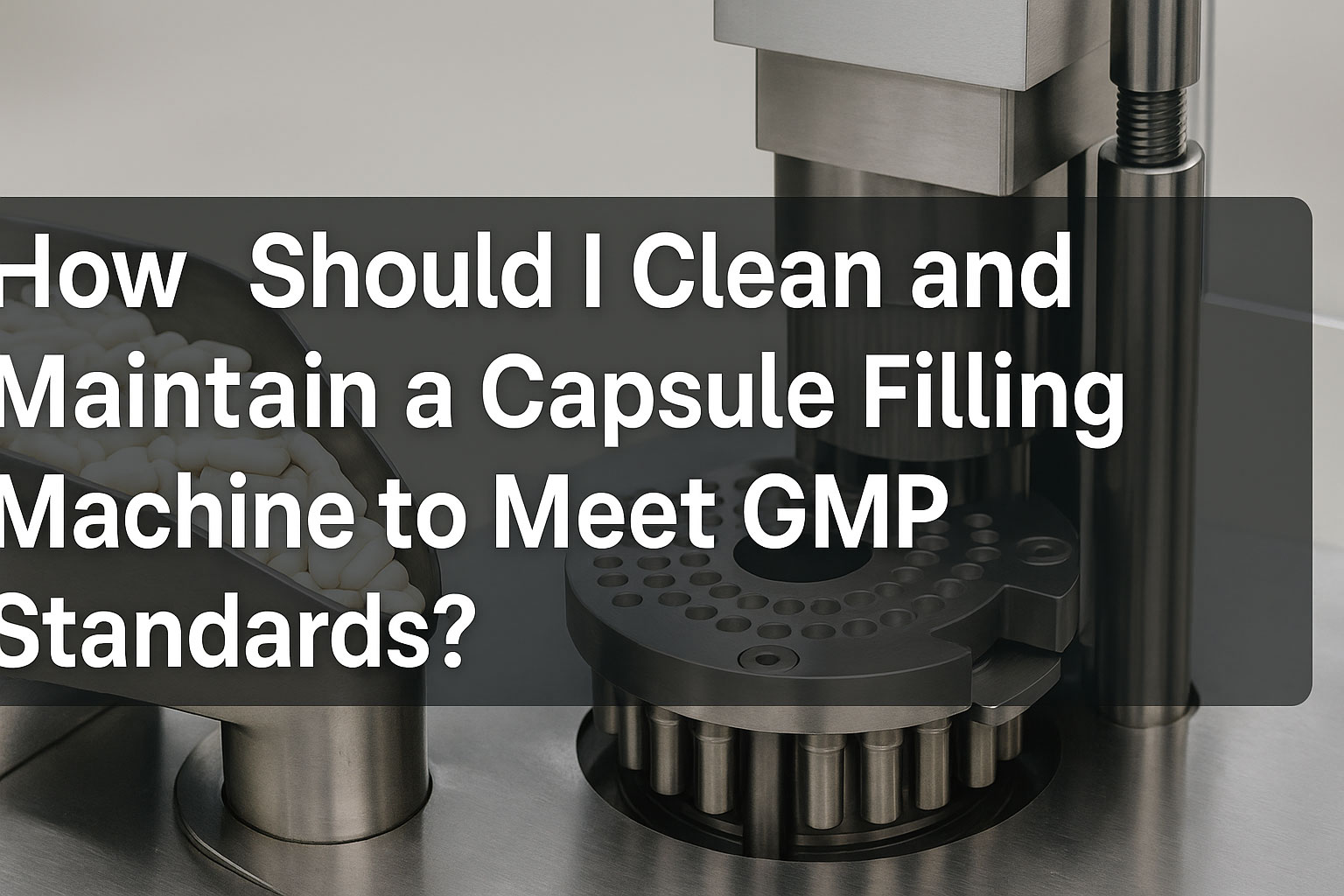
12 Aug How Should I Clean and Maintain a Capsule Filling Machine to Meet GMP Standards?
Maintaining a capsule filling machine in optimal condition is crucial for ensuring high-quality pharmaceutical products and compliance with Good Manufacturing Practice (GMP) regulations. Proper capsule filling machine cleaning and regular equipment maintenance not only prevent contamination and cross contamination but also enhance production efficiency and reduce unexpected downtime. This article outlines comprehensive cleaning procedures, preventive and predictive maintenance strategies, and a maintenance plan that production departments can implement to keep automatic capsule filling machines running smoothly.
1. Introduction: The Importance of Capsule Filling Machine Cleaning and Maintenance
In pharmaceutical manufacturing, capsule filling machines represent critical equipment that directly affects product quality and safety. The automated processes involved in capsule filling demand rigorous cleaning and maintenance to prevent contamination and ensure compliance with regulatory bodies. Inadequate cleaning or neglecting maintenance can lead to powder residue buildup, capsule defects, equipment malfunction, and ultimately non compliance with GMP standards.
Routine cleaning and maintenance activities ensure the capsule filling machine operates efficiently, minimizing contamination risks and enhancing overall productivity. Moreover, thorough documentation of cleaning and maintenance procedures is an essential part of regulatory compliance and audit readiness. This article focuses on best practices in capsule filling machine cleaning and maintenance, including the handling of critical components, lubrication, and scheduling of maintenance activities.
2. Cleaning Procedures for Capsule Filling Machines
Effective equipment cleaning is the foundation of GMP compliance in capsule filling operations. The cleaning process involves removing powder residue and other contaminants from the machine’s contact parts and ensuring all surfaces are sanitized to prevent cross contamination between production runs.
2.1 Routine Cleaning After Each Production Run
After each batch, operators should perform routine cleaning of the capsule filling machine. This includes the following steps:
Power Down and Disassembly: Before cleaning, the automatic capsule filler must be powered down and safely disassembled, focusing on primary components that come in direct contact with the product such as the filling station, dosing discs, tamping pins, and capsule hoppers.
Dry Cleaning: Use compressed air and a soft brush to remove loose powder residues and stubborn residues in hard to reach areas. This reduces the amount of wet cleaning required and helps prevent powder from clogging moving parts.
Wet Cleaning: Apply a mild detergent solution or isopropyl alcohol (70% or higher) to clean product-contact surfaces thoroughly. Isopropyl alcohol is especially effective for sanitizing and dissolving residual powder without damaging the machine.
Rinsing and Drying: After cleaning with detergent or alcohol, all components should be rinsed (if applicable) and dried completely to avoid moisture accumulation, which can cause corrosion or microbial growth.
Lubrication: Proper lubrication of moving parts, including cam tracks and tamping pin assemblies, is essential to maintain smooth operation and prevent wear. Use a food grade lubricant or oil recommended by the manufacturer.
Reassembly and Inspection: After cleaning and lubrication, reassemble the machine carefully, ensuring all parts are properly aligned and secured. Inspect for any visible damage or wear before restarting production.
2.2 Weekly and Monthly Deep Cleaning
In addition to routine cleaning, more thorough cleaning should be scheduled weekly or monthly depending on production volume and product type.
Disassemble Complex Components: This includes removing and cleaning dosing discs, sealing jaws, conveyor belts, and other critical components where powder residues tend to accumulate.
Manufacturer-Approved Solvents: Use solvents and cleaning agents specified by the equipment manufacturer to ensure compatibility and effectiveness.
Inspection of Seals and Gaskets: Check O-rings, gaskets, and other seals for wear or damage and replace if necessary to maintain proper sealing and prevent contamination.
Cleaning Hard to Reach Areas: Pay special attention to areas that are difficult to access during routine cleaning, such as underneath turret plates or inside capsule sorting mechanisms.
2.3 Cleaning Key Components to Prevent Contamination
Key components of the capsule filling machine require special attention during cleaning:
Filling Station: This is where powder is dosed into capsules; residues here can cause cross contamination if not cleaned properly.
Tamping Pins: These pins compact the powder inside capsules and often accumulate fine powder residues.
Capsule Hopper and Transport Systems: These systems handle empty capsules and should be kept free from dust and contaminants to avoid capsule defects.
Regular cleaning of these components using soft brushes and appropriate solvents is essential to maintain product quality and prevent contamination.
3. Equipment Maintenance for Capsule Filling Machines
Beyond cleaning, equipment maintenance is critical for sustaining the performance, reliability, and compliance of capsule filling machines.
3.1 Preventive and Predictive Maintenance Strategies
Regular Maintenance Checks: Conduct routine inspections of critical components prone to wear, such as tamping pins, dosing discs, seals, and electrical systems. Early identification of worn parts prevents unexpected downtime.
Replacement of Worn Parts: Timely replacement of parts based on wear or manufacturer’s recommendations ensures the machine remains properly aligned and operates efficiently.
Calibration of Dosing Systems: Regular calibration maintains fill weight accuracy, reducing capsule defects and ensuring compliance with product specifications.
Testing Capsule Integrity: Regular testing helps identify problems with capsule filling and sealing before large-scale production.
Predictive Maintenance: Use data and equipment monitoring to predict when maintenance should be performed, optimizing production schedules and reducing downtime.
3.2 Proper Lubrication Practices
Smooth operation of moving parts depends heavily on proper lubrication.
Use Food Grade Lubricants: Only food-grade or pharmaceutical-grade lubricants should be used to avoid product contamination.
Lubrication Schedule: Lubricate cam tracks, turret bearings, and tamping pin assemblies regularly, typically every 200–300 operating hours or as specified in the manufacturer’s instructions.
Avoid Over-Lubrication: Excess lubricant can attract dust and powder residues, leading to contamination or machine malfunction.
3.3 Developing a Maintenance Plan
A structured maintenance plan is essential to ensure all cleaning and maintenance activities are performed consistently and documented thoroughly.
Daily, Weekly, Monthly, and Annual Tasks: Define clear maintenance activities for each interval, covering cleaning, inspections, lubrication, and part replacements.
Documentation: Maintain logs of all maintenance activities, cleaning procedures, and inspections to comply with GMP documentation requirements and support audits.
Training and Professional Servicing: Train production and maintenance personnel on correct cleaning and maintenance procedures. Schedule professional servicing periodically to address complex repairs and calibrations.
4. Compliance with GMP Standards in Capsule Filling Operations
Maintaining GMP compliance requires not only following cleaning and maintenance procedures but also documenting and validating these processes.
Cleaning Validation: The cleaning process must be validated to demonstrate that it effectively removes residues and prevents contamination.
Personnel Training: Operators and maintenance staff must be qualified and regularly trained on GMP-compliant cleaning and maintenance.
Regulatory Documentation: All cleaning procedures, maintenance activities, and equipment performance checks should be thoroughly documented and available for inspection by regulatory bodies.
Audit Preparedness: Regular internal audits ensure ongoing compliance, identifying areas for improvement in the maintenance plan and cleaning process.
5. Conclusion: Achieving High Quality and Production Efficiency Through Proper Cleaning and Maintenance
Proper capsule filling machine cleaning and maintenance are essential to producing high quality pharmaceutical products and maintaining compliance with GMP standards. A well-executed cleaning procedure prevents contamination and cross contamination, while a comprehensive maintenance plan minimizes downtime and extends equipment life.
By adhering to recommended cleaning schedules, applying preventive and predictive maintenance strategies, and documenting all activities, production departments can ensure smooth operation of automatic capsule filling machines. This not only enhances production efficiency and product quality but also supports regulatory compliance and reduces the risk of unexpected failures.
Investing time and resources in capsule filling machine cleaning and maintenance ultimately leads to higher productivity, cost savings, and a stronger reputation for quality in pharmaceutical manufacturing.
