
24 Dec Improving Accuracy and Speed with Advanced Tablet Counting & Filling Lines
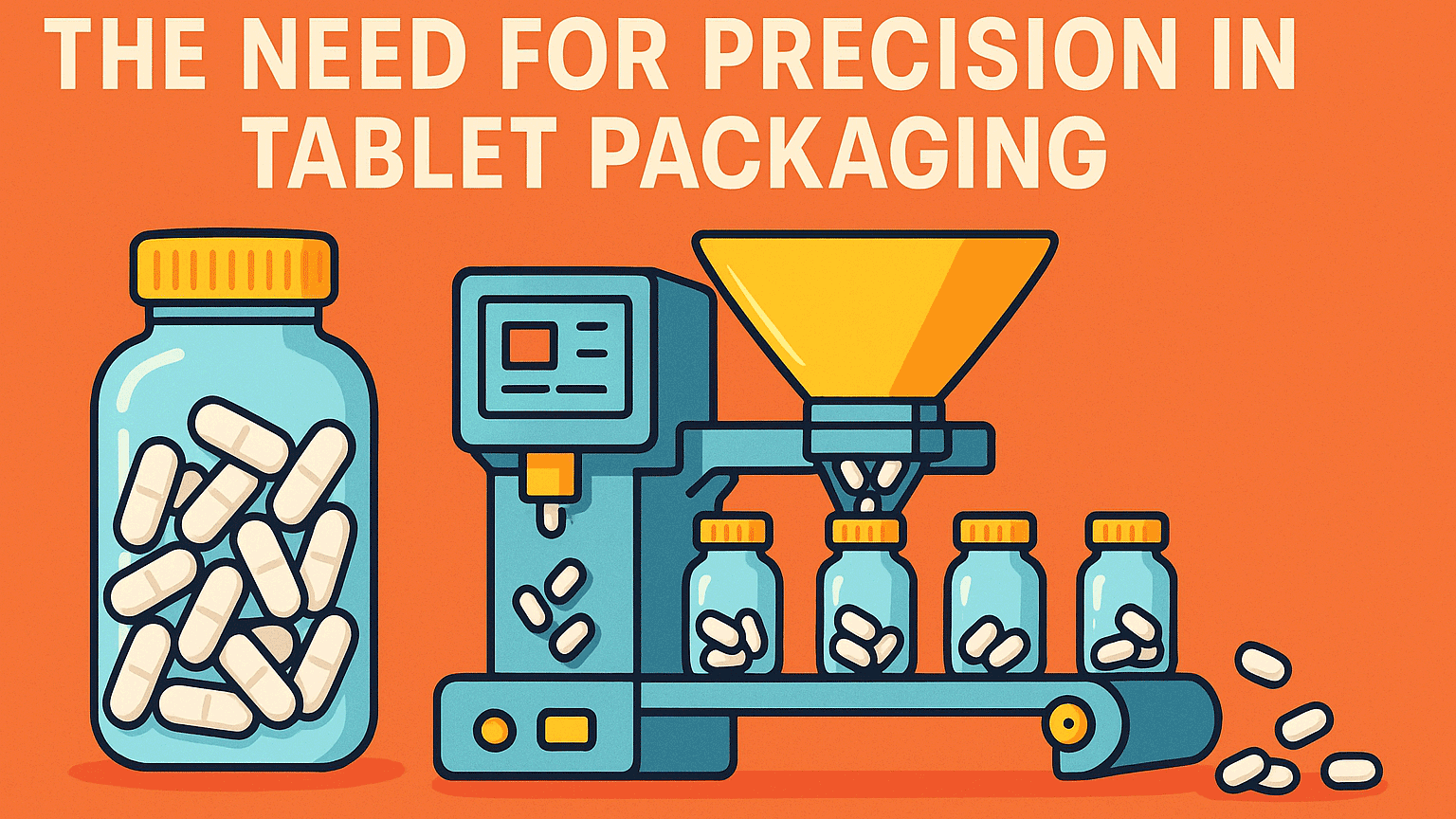
I. Introduction: The Need for Precision in Tablet Packaging
Why Accuracy and Speed Matter in Pharmaceutical and Nutraceutical Packaging
In today’s competitive nutraceutical and pharmaceutical industries, achieving the correct amount of tablets or capsules in each container is critical for regulatory compliance and customer satisfaction. Miscounts can lead to safety issues, product recalls, and reputational damage. As companies aim to deliver high-quality products with cost-effective solutions, precise counting and filling capabilities become more essential than ever.
From Manual to Automated: Evolution of the Filling Line
Historically, tablet counting and filling involved manual labor, which was both time-consuming and error-prone. The evolution of automated tablet counting machines and automatic filling machines has revolutionized how tablets are packaged. Automated equipment reduces human contact, speeds up operations, and ensures more accurate fills, making it particularly suited for large volumes and diverse container types like plastic bottles, glass jars, or even flexible bags.
II. Core Features of a Modern Tablet Counting Machine
High-Speed Counting with Sensor-Based Technology
Modern tablet counting machines use dust-proof optical sensors to verify each tablet or capsule as it passes through the filling station. This advanced method ensures near-perfect accuracy rates, often reaching 99.98% or higher, significantly reducing errors and improving overall product quality. This sensor-based technology allows companies to meet high production demands without compromising quality.
Dust-Proof, Jam-Resistant Design for Long-Term Stability
These machines are engineered with durability and reliability in mind. Features like jam-resistant modular nozzles, easy-to-maintain parts, and dust-extraction systems ensure continuous, uninterrupted operation. Such designs are particularly important when filling coated tablets or powdered capsules, which tend to create dust during the process.
Smart Interfaces and User-Friendly Controls
Touchscreen controls and programmable recipes make the operation straightforward, even for new team members. Operators can quickly change batch settings, reduce downtime during changeovers, and monitor performance in real-time. These digital interfaces contribute to greater efficiency and help maintain consistent output.
III. Automatic and Semi Automatic Filling Machines: Choosing the Right Solution
Automatic Filling Machines for Maximum Throughput
Automatic filling machines are designed to handle high-speed production lines and can fill up to 200 plastic bottles per minute. They integrate seamlessly with other equipment on the filling line, including capping systems and labeling units. Their modular configurations allow for customized setups based on bottle size, tablet type, and production goals.
Semi Automatic Filling Machines for Small to Mid-Sized Runs
For smaller operations, startups, or those with limited budgets, a semi automatic filling machine offers a balance between manual control and automation. These machines are cost-effective, easier to maintain, and provide sufficient throughput for mid-sized production goals, especially when large volumes are not needed.
Plastic Bottles Filling Machines: Versatility and Speed
Plastic bottles remain the most popular container type in supplement packaging due to their cost, durability, and lightweight design. A plastic bottles filling machine is engineered to work with various bottle sizes and shapes. These machines also support automatic bottle indexing, ensuring each container receives the correct tablet count, with minimal contact, maintaining hygiene and compliance.
IV. Designing an Efficient Tablet Counting & Filling Line
Multi-Lane Counting Units: Scaling Up Capacity
High-volume manufacturers benefit from multi-lane tablet counting machines with 8, 12, or 16 lanes running in parallel. These configurations allow for continuous 24/7 operation, increasing throughput while maintaining high accuracy. Machines can be stacked or arranged based on the available footprint and required production capacity.
Minimizing Downtime with Modular Design
Quick-change tooling, modular designs, and tool-free maintenance reduce downtime and allow operators to switch between products and container types quickly. These features help streamline operations, reduce labor costs, and ensure efficient manufacturing at all times.
Quality Control and Reject Mechanisms
Built-in quality assurance systems detect miscounts, underfills, or overfills in real-time. Faulty containers are automatically rejected from the filling line, ensuring that only accurate and compliant bottles proceed to the labeling and capping stages. These systems help reduce waste, prevent rework, and maintain a high level of product consistency.
|
Feature |
Automatic Machines |
Semi-Automatic Machines |
|---|---|---|
|
Throughput |
Up to 200 bottles/min |
Up to 50 bottles/min |
|
Labor Requirement |
Minimal |
Moderate |
|
Cost |
Higher initial investment |
Lower upfront cost |
|
Flexibility |
High (modular) |
Moderate |
|
Suitability |
Large-scale manufacturing |
Mid to small-scale production |
V. Conclusion: Elevating Packaging Performance with the Right Equipment
How the Right Tablet Counting Machine Improves Efficiency
Investing in a high-quality tablet counting machine and integrating it with suitable automatic or semi automatic filling machines can significantly enhance packaging line performance. Manufacturers benefit from higher throughput, reduced labor costs, and more consistent output, which directly translates into customer satisfaction and brand reputation.
Future-Proofing with Automation and Flexibility
As market demands evolve, flexible configurations and scalable designs allow businesses to adapt quickly. Machines capable of working with a range of containers—from small plastic bottles to large containers—ensure long-term operational efficiency. Additionally, real-time monitoring and predictive maintenance capabilities minimize downtime and extend equipment life.
In conclusion, supplement manufacturers looking to streamline production and meet the growing expectations of the market must consider a modern filling line that combines speed, accuracy, and automation. By choosing the right combination of tablet counting machines and filling equipment, companies can reduce costs, enhance quality control, and maintain a competitive edge in the global packaging market.
