15 Dec Key Features to Look for in a Blister Packaging Machine for Supplements
The Role of Blister Packaging Machines in the Supplement Industry
Why Blister Packaging Matters for Supplements
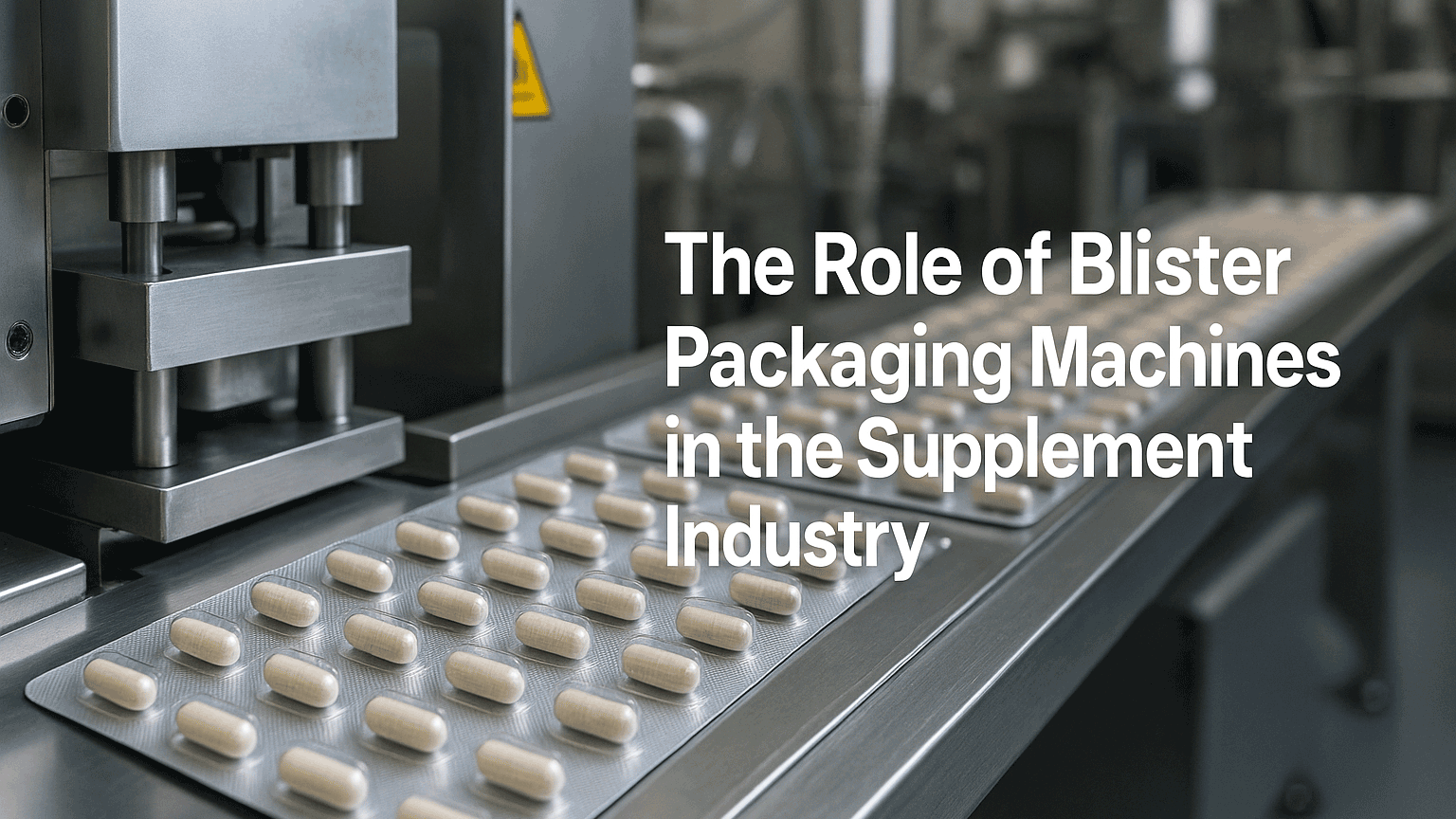
In the world of dietary supplements, pharmaceutical blister packaging remains one of the most reliable packaging methods. Blister packs are widely used for solid oral dosage forms such as tablets, capsules, and softgels due to their ability to offer dose accuracy, tamper-evidence, and superior protection. Each dose is sealed individually in its own cavity, minimizing the risk of contamination and enhancing product integrity during storage and transport. This containment improves the user experience by ensuring consistency in dosage and safety with every use.
Market Demand for Efficient, Compliant Packaging Solutions
As the dietary supplement market grows rapidly, there is increasing demand for equipment that can meet regulatory requirements and scale production efficiently. Manufacturers are under pressure to maintain high product quality while minimizing waste and maximizing output. Investing in a high-precision blister packaging machine is crucial for companies seeking to lead in quality, safety, and speed of delivery. With global markets enforcing stricter regulations around pharmaceutical technology and supplement labeling, the ability to comply through automation and improved packaging technology becomes a strategic advantage.
Core Design Features of a High-Quality Blister Packaging Machine
Integrated Forming Station for Precise Package Formation
The forming station is the first critical component in any blister packaging machine. It determines the exact shape and size of the blister cavities using heat and pressure to mold the packaging material. High-performance forming stations are engineered to deliver accurate, bubble-free cavities that match the specifications of the dosage form being packed. Whether it’s tablets, capsules, or other types of pharmaceutical products, correct cavity formation ensures each product fits securely and maintains stability.
A high-precision forming station also helps reduce material waste and improves machine speed, ensuring the packaging process does not hinder the entire production line.
Sealing Mechanism and Seal Integrity Control
Sealing is a core process within blister packaging. Machines must provide precise heat and pressure control to achieve strong and uniform seals. Seal integrity is crucial to preventing the ingress of air, moisture, or other contaminants that could degrade the product. If seal quality is compromised, shelf life and product safety are at risk.
Advanced blister packaging machines include servo-driven sealing systems and pressure calibration tools that maintain consistent sealing parameters. Real-time monitoring systems help verify that sealing occurs within defined tolerances, ensuring airtight blister packs.
Material Compatibility and Versatility in Blister Packaging
Blister packaging machines must be compatible with various materials including PVC, PVDC, aluminum foil, biodegradable films, and other innovative materials used in eco-friendly packaging designs. The versatility of a machine to handle different packaging materials allows pharmaceutical companies to meet customer demands and regulatory sustainability goals.
Such machines must be equipped to handle the combination of forming and sealing for diverse container shapes, sizes, and material properties without compromising on seal strength or package integrity.
Ensuring Product Protection and Extended Shelf Life
Maintaining Shelf Life with Airtight Seal Integrity
The core function of blister packs is to protect contents from external elements that can impact product quality over time. With airtight seal integrity, blister packaging machines ensure supplements are shielded from moisture, oxygen, and UV exposure — all of which can deteriorate product efficacy.
Correct calibration of sealing components and maintaining consistent contact pressure during production are essential steps in achieving optimal shelf life for the finished product.
Protecting Dosage Forms from Mechanical Damage
Blister packaging must also protect delicate pharmaceutical forms from mechanical damage during packaging and transport. Products like soft capsules or effervescent tablets require specialized handling systems to prevent breakage. Modern machines use servo-controlled feeding systems that gently move components into blister cavities. Automated alignment and vibration-reducing molds further ensure that items are placed correctly without being damaged.
Quality Control and Compliance in Blister Packaging Machines
In-Line Inspection Systems for Quality Control
Quality control is one of the most critical aspects of pharmaceutical blister packaging. Machines today are designed with integrated in-line inspection systems that verify product placement, sealing, and labeling accuracy. Vision systems detect defects such as missing products, damaged blisters, or incorrect printing.
These systems are essential to meet the regulatory framework laid out by international health authorities and to maintain trust in the pharmaceutical company producing the supplements.
Automation and Servo-Controlled Indexing for Accuracy
Automation plays a critical role in reducing manual labor and improving consistency. Servo-controlled indexing systems regulate the movement of the packaging film with precise timing, allowing each station to function seamlessly. This results in higher speeds, reduced cycle time, and superior placement accuracy.
High levels of automation also support data tracking, which can be used for product traceability, printing labels, and verifying packaging specifications. This enhances overall production control.
GMP Compliance and Easy Cleaning Design
Blister packaging machines for the supplement industry must comply with Good Manufacturing Practices (GMP). To meet this standard, machines are typically manufactured from stainless steel with smooth, easy-to-clean surfaces. Components that come into contact with supplements must be non-reactive and maintain hygienic standards.
Tool-less disassembly features allow cleaning personnel to perform quick and effective sanitization between production batches. This reduces downtime and helps prevent cross-contamination.
Flexibility, Efficiency, and Future-Proofing
Flexibility to Handle Different Dosage Forms and Blister Pack Sizes
Blister packaging machines must support various types of products and sizes without requiring excessive reconfiguration. Capsule sizes, tablet shapes, and even liquid containers can all be handled by machines that offer format changeover options and modular design. This flexibility is especially valuable for companies offering many applications in personalized nutrition or small-batch pharmaceuticals.
Reducing Downtime Through Automation and Modular Design
Modular blister packaging machines allow faster replacement of components such as molds, forming stations, or sealing units. With plug-and-play features, operators can reduce machine idle time between production runs. Automation extends to feeding systems, printing systems, and rejection modules, making the machine easier to operate and more responsive to manufacturing shifts.
A table example illustrating modular vs. non-modular setup might look like this:
|
Feature |
Modular Machine |
Traditional Machine |
|---|---|---|
|
Changeover Time |
<10 minutes |
>30 minutes |
|
Downtime During Cleaning |
Minimal |
High |
|
Custom Format Compatibility |
High |
Limited |
|
Maintenance Accessibility |
Easy |
Complex |
Smart Features and Predictive Maintenance Capabilities
IoT-enabled blister packaging machines offer real-time monitoring, predictive analytics, and remote diagnostics. These features reduce unplanned downtime and improve long-term productivity. Predictive maintenance uses data from machine components to detect wear and schedule servicing before failures occur.
Digital interfaces also allow manufacturers to monitor speed, forming pressure, sealing temperature, and other production parameters, improving both compliance and operational insight.
Making the Right Investment for Supplement Packaging
Choosing the right blister packaging machine is no longer just a matter of speed or cost — it’s about optimizing product quality, ensuring regulatory compliance, enhancing seal integrity, and improving shelf life. With features like high-precision forming stations, automated inspection, real-time monitoring, and modular systems, today’s machines provide a powerful platform for supplement and pharmaceutical manufacturers.
Companies must evaluate key aspects such as equipment material, sealing accuracy, automation level, and cleaning efficiency when selecting a blister packaging machine. As the supplement industry grows, investments in advanced pharmaceutical blister packaging will remain critical for achieving product excellence and long-term success in competitive global markets.
